

College Health Surveillance Network (CHSN) is the first national database of college students’ health data, collected from 23 student health centers at major four-year universities. College health centers are the primary source of preventive and therapeutic health services for college students. Initially funded by the Centers for Disease Control and Prevention (CDC), CHSN gathers data on more than 730,000 enrolled students attending a nationally representative sample of colleges and universities. De-identified data includes diagnoses (i.e., ICD-9 codes) and procedures (i.e., CPT codes). Monitoring the health of college students is important because this population has unique health risk factors. CHSN data can reveal important trends regarding the health and health care of college students.
Access CHSN Data Access Weekly Flu Season Data
Recent CHSN Posts
Epidemiology of College Health
This publication, authored by James Turner and Adrienne Keller of the National Social Norms […]
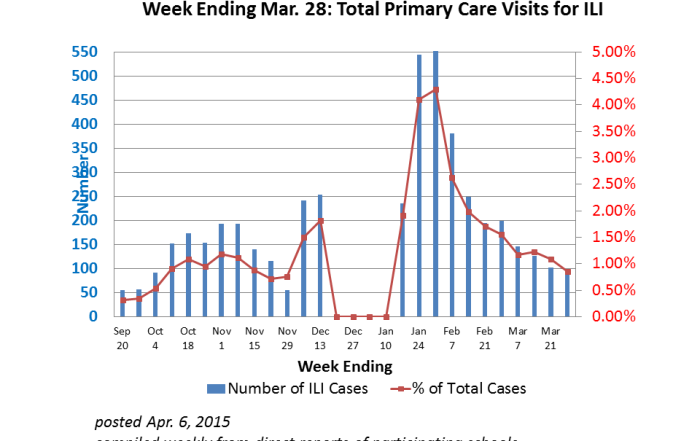
CHSN Flu Tracking March 28
This is the final Flu Tracking report for the 2014-2015 school year. In week […]
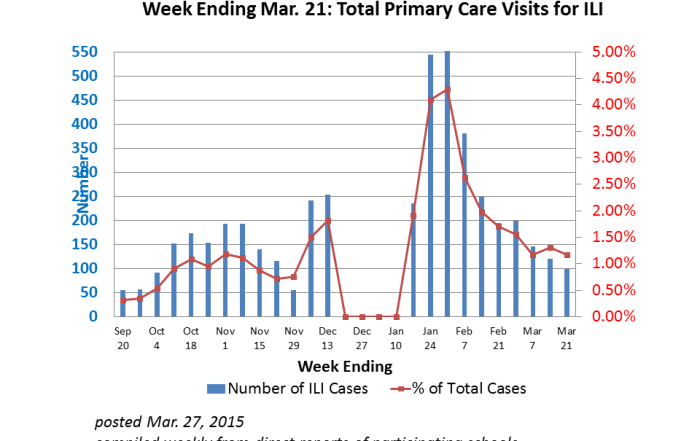
CHSN Flu Tracking March 21
In the week 22 report of influenza activity on campuses in the College Health Surveillance Network, all […]
Click here for All CHSN Posts.
History of NSNI and CHSN:
NSNI developed the CHSN in 2010, through a grant from the CDC. Data collection started on January 1, 2011. Originally developed to track vaccine uptake, CHSN has been expanded to collect and analyze data from nearly 1 million patient encounters per year.
Some examples of research questions that CHSN data can address:
- When is the peak of the influenza season in college students?
- What is the incidence of a particular infectious disease among college students?
- How often do college students seek health care from student health centers?